The world of buying and selling has been changed by e-commerce, and dropship suppliers are certainly part of this revolution.
What is dropshipping?
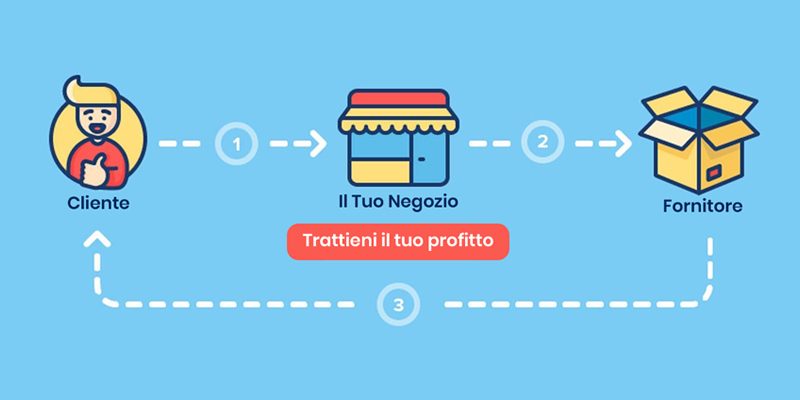
Dropshipping, also called drop ship or drop shipping, is a specific sales model that lets you sell without a physical warehouse. The seller is only an intermediary: once the customer has been won and the sale made, the seller passes the order to the supplier (also called the dropshipper), who ships directly to the end user, perhaps with packaging that carries the brand of the e-commerce site. The logistics of a dropshipping e-commerce site are therefore handed over to the supplier (or suppliers, if it relies on several warehouses).
Is it worth selling in dropshipping?
In theory the answer is YES. The owner of an e-commerce site that works in dropship with suppliers specialises only in advertising the products, without the tasks tied to logistics... and earns from it too!
The dropship model with suppliers has its pros and cons for both parties involved, but for everything to work you need a thorough analysis both of the sector to operate in and of the partners to work with. This study guarantees the satisfaction of the final buyer, so that they keep buying, speak well of you to their contacts and leave good reviews on the web too. Let's also see the main advantages of dropshipping e-commerce for seller and supplier:
Advantages for the e-commerce manager:
- A better opportunity to create a sales business without having to invest large initial capital
- No need to own warehouses or hire employees from the start;
- Can trade both through their own e-commerce site and through marketplaces (eBay, Amazon)
Opportunities for the dropshipper:
- First of all, the supplier sees its sales network grow
- Dropshipping allows a more widespread penetration of online markets.
How to assess a supplier:
The choice of suppliers is very important: besides the quality of the products, you must assess and verify reliability and punctuality. There are some useful (though not essential) requirements for assessing a supplier. Here they are:
- It should let you monitor deliveries to the end customer in a simple, transparent and punctual way
- It should send buyers an e-mail notification as soon as the order status becomes “out for delivery”
- It should adopt fast, convenient and cost-effective return policies
- It should not ask for extra costs or fees to join its dropshipping sales programme
- It should accept flexible payment options in line with the preferences of the host e-commerce site.
Which category of supplier to choose?
As said above, the choice of suppliers, together with that of the product sector, is one of the keys to success for dropshipping e-commerce. Besides the quality of the products, you must assess and verify reliability and punctuality.
There are 3 categories of dropshipper:
- Intermediaries: national and international organisations that offer wholesale prices and let you start an online shop simply and quickly, thanks to product catalogues that are very easy to import. Often, however, these intermediaries do not hold the products directly, and with foreign suppliers you need to check for possible customs costs
- Stockists: organisations that have the goods in their warehouse, with very large catalogues of which you can resell a part with suitable marketing actions
- Manufacturers and distributors: organisations that sell wholesale and are open to dropshipping, often because they are not equipped to sell to the end user
Industry statistics show that the third solution is often the best, but much depends on the type of business and on the average order value of the e-commerce site.
How are products imported into the site?
With a single click! No, we are not joking. Dropshippers are almost always able to provide a CSV file for a quick import of the items to resell. Using an automatic import system such as Scaboo guarantees daily maintenance of the catalogues (with continuous updating) and many other customisation and optimisation features for e-commerce sites, for example on price lists.
For dropshipping in particular, the usefulness of automation software lies above all in passing the complete product data and the stock levels, which avoids putting items not available for immediate shipping into the end customers' orders.
But what is worth selling on an e-commerce site?
Product sectors deserve a discussion of their own, which you can find in another article: there we see whether it pays to sell many product categories or to build a niche, passionate clientele.